Published on · Updated on
Table of Contents
Why does gold shine differently from ordinary stone? Why do eyes see light at all, rather than simply existing in darkness? Greek myth had an answer for both questions, and it wasn’t a scientific one: a Titan goddess named Theia, whose very presence was believed to explain why brightness exists in the world at all.
A Titan of Sight and Radiance
Theia is one of the twelve Titans, daughter of Gaia and Uranus, and sister-wife to Hyperion, with whom she produces three of Greek mythology’s most consistently active deities: Helios the sun, Selene the moon, and Eos the dawn. Hesiod’s Theogony, composed in the late 8th or early 7th century BCE, doesn’t elaborate extensively on Theia’s own character, but later Greek poetic tradition, particularly Pindar, expands on what her name and function actually meant.
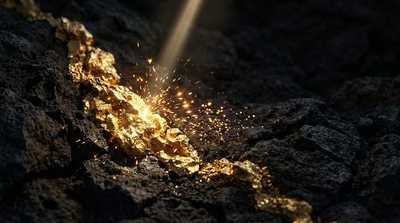
Pindar, writing in the 5th century BCE, directly credits Theia with giving gold its special value and brightness, and with making the light by which mortals see distinguishable from ordinary darkness. That’s a striking claim: rather than simply being the mother of light-bearing gods, Theia herself is described as the underlying reason radiance exists as a quality at all, in metal, in the sky, and in the act of vision itself.
Sight as a Divine Gift
The connection between Theia and eyesight specifically deserves attention, because it reveals something distinctive about how the Greeks thought about perception. In Pindar’s telling, human ability to see isn’t simply a biological fact; it’s a divine inheritance traceable to Theia’s own nature. That framing places Theia in an unusual category among the primordial figures discussed across Greek myth: she isn’t just the personification of a physical phenomenon like earth or sea, she’s connected to a faculty, the capacity for visual perception itself, treated as something that had to be granted rather than simply existing.
This is part of why some later interpreters have described Theia as a goddess of “far-shining” or divine sight more broadly, an idea consistent with the fact that her children, Helios, Selene, and Eos, are all beings whose defining feature is being seen, luminous presences that mark the passage of day and night for every mortal who looks up at the sky.
A Quieter Presence Than Her Husband
Compared to Hyperion, who at least has the ambiguity of being conflated with his son Helios in some sources, Theia has almost no independent mythic action at all in the earliest surviving material. She isn’t given a personal scene of decision, conflict, or speech anywhere in Hesiod. Her importance, like that of several Titans associated with cosmic structure rather than dynastic politics, is established entirely through what she generates and, in Pindar’s case, through what quality she’s said to embody.
That quietness shouldn’t be mistaken for insignificance. Ancient Greek religious and poetic thought regularly treated certain concepts, brightness, sight, the gleam of precious metal, as needing a divine source, and Theia was the figure assigned to that role. She represents a category of Greek divinity focused on explaining a quality of experience rather than narrating a life story.
Theia and the Later Association With Gold
Pindar’s specific claim that Theia is responsible for gold’s brightness is worth sitting with a little longer, because it reflects a broader ancient tendency to link the most prized, visually striking materials to divine origin. Gold wasn’t simply valuable to the Greeks because it was rare; its gleam itself carried an association with the divine, precisely the kind of unusual, light-catching quality that a goddess like Theia would plausibly be credited with. That detail also helps explain her name, which relates to the Greek word for “goddess” or “divine,” reinforcing the sense that Theia represents divinity expressed specifically through visible brightness rather than through action or authority.
Theia’s Place Among the Titans
Positioned within the broader Titan generation, Theia belongs to a cluster of figures, alongside Hyperion, whose collective function is cosmological rather than political. Where Cronus and Rhea’s story is about succession, fear, and eventual overthrow, and Oceanus and Tethys represent the world’s waters, Theia and Hyperion together represent light in its full daily cycle, sun, moon, and dawn, born from a single Titan pairing whose own individual stories remain almost entirely unwritten. That absence of personal narrative, paired with the enormous and continuously visible legacy of her children, makes Theia one of the clearest examples in Greek mythology of a goddess whose significance lies entirely in origin rather than in action.
Theia in Relation to Later Light-Associated Goddesses
Theia’s specific association with sight and brightness sets her apart from other female primordial and Titan figures whose domains overlap loosely with light or the sky. Eos, her own daughter, becomes the active goddess of dawn’s arrival, a moment rather than a quality. Selene, another daughter, becomes identified with the moon as a specific celestial body. Theia herself remains one step more abstract than either: not a specific light-bearing event or object, but the underlying principle that makes brightness perceptible and valuable in the first place. That layered structure, an abstract source Titan generating more concrete, active Olympian-adjacent deities, recurs throughout Hesiod’s genealogy and helps explain why so many Titans, Theia included, can feel underdeveloped as individual characters while still being described as foundational to how later, more famous gods actually function.
For the full picture of how Theia fits among the other Titans, see the Titans guide, part of Godspire’s complete guide to the Greek pantheon.
Frequently Asked Questions
What was Theia the goddess of?
Theia is associated with sight, radiance, and, according to the poet Pindar, the special brightness found in gold and in light itself, making her the underlying source of visible brilliance in Greek cosmology.
Who are Theia’s children?
With her husband Hyperion, Theia is the mother of Helios (the sun), Selene (the moon), and Eos (the dawn), according to Hesiod’s Theogony.
Does Theia appear in any major myths?
Not extensively. Theia has very little independent narrative in the earliest surviving sources; her significance comes primarily from her children and from Pindar’s later description of her connection to brightness and gold.
What does Theia’s name mean?
Theia’s name relates to the Greek word for “goddess” or “divine,” reflecting her association with radiance and divinity expressed through visible light rather than through personal action or authority.

Kaiqui Damasceno is a mythology writer and researcher dedicated to exploring the stories, gods, heroes, and ancient traditions that shaped human culture. Through engaging storytelling and thoughtful analysis, Kaiqui brings mythology to life, uncovering the deeper meanings, conflicts, symbols, and timeless lessons hidden within ancient myths.